Architectural Metal Restoration: What It Actually Is
Quick Answer: Architectural metal restoration is the specialized craft of returning ornamental and structural building metalwork to its original integrity. It covers bronze doors, brass hardware, copper roofing, cast iron radiators, wrought iron railings, chrome and nickel plating, chandeliers, and decorative trim. Done well, restoration preserves the original metal that gives a building its character. Done poorly, you lose the part that made the property worth restoring in the first place.
TLDR:
- Architectural metal restoration covers 8 broad categories: facades and ornamental ironwork, lighting and chandeliers, plating, custom castings and fabrication, hardware, stone restoration adjacent to metal, steel casement windows, and cast iron radiators.
- Restoration is almost always cheaper than replacement when the original metalwork has historic, architectural, or sentimental value. Restoration preserves the patina, the detail, and the building’s character.
- A real restoration project takes 4 to 16 weeks for most landmark work, depending on scope. Rush jobs exist but compromise quality.
- Cost varies widely by job type. Plating runs hundreds to low thousands. Major facade restoration runs five to seven figures. Get a real site walkthrough before any quote.
- The right shop has decades of landmark work in their portfolio, technical fluency on alloys and processes, and named past projects you can verify.
- Watch for shops that conflate polishing with restoration, refuse to walk the site, or quote without specifying alloy, technique, or finish.
- Metal Man Restoration has 20+ years of work on landmark buildings including Newark City Hall (2006 NJ Historic Preservation Award), Yankee Stadium plaques, the Beacon Theatre, Alexander Hamilton US Customs House, and Yale University’s Harkness Tower.
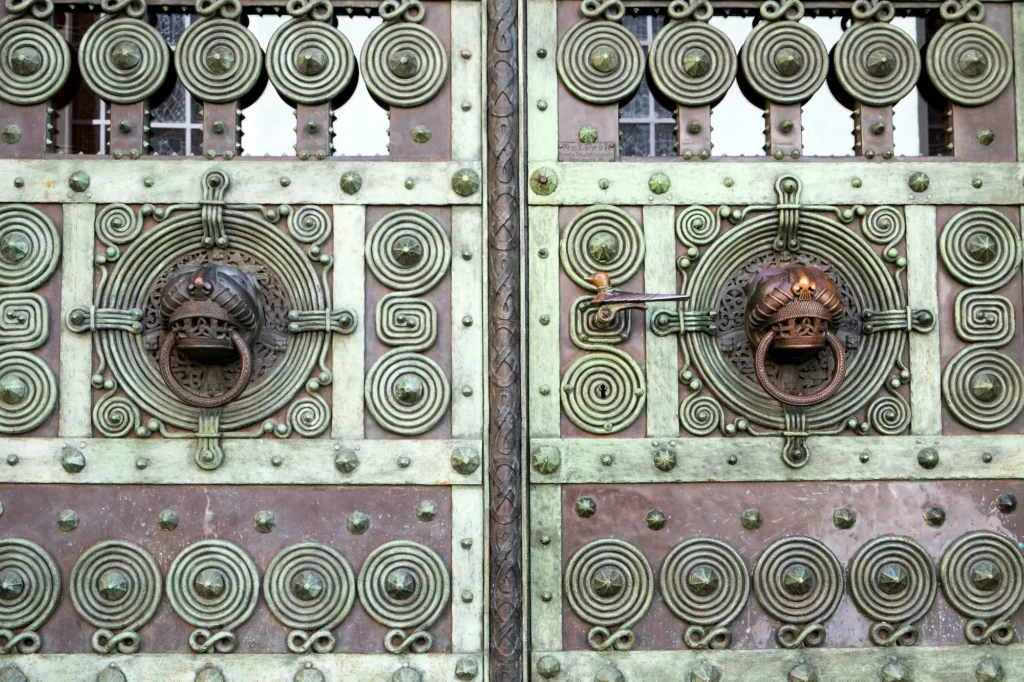
Most architectural metal in NYC and the tri-state is older than the people who own the buildings it sits on. Federal-era door hardware. Beaux-Arts bronze lobby details. Theater chandeliers from the 1920s. Cast iron radiators from the prewar era. Newark City Hall’s exterior metalwork, dating to 1906, which we restored to win the 2006 NJ Historical Preservation Award.
When that metal needs work, building owners and architects face a real decision. Replace it, restore it, or let it continue degrading. The replacement option almost always sacrifices the very thing that made the building distinctive. The “let it degrade” option compounds the cost every year of delay. Restoration is usually the right answer, but only when it is done by a shop that knows what it is doing.
Working with a landmark property in NYC, Westchester, or the tri-state metro? Metal Man Restoration has been doing this work in Mount Vernon since the 1980s. We have walked more historic facades, lobbies, and chandeliers than most architects we work with.
Call 914-662-4218 or request a consultation to walk the property with us.
Why Restoration Beats Replacement on Historic Buildings
The cost math is the simplest case. Replacement of original bronze or wrought iron with new fabrication runs 3 to 8 times what restoration costs, and the result is never quite the same. Modern metal mills do not produce the exact alloy compositions that a 1910 bronze door was cast from. They do not match the patination that a hundred years of weather and human contact has imparted. The replacement looks new in a way that signals “replacement.”
The deeper case is preservation value. The Secretary of the Interior’s Standards for the Treatment of Historic Properties, maintained by the National Park Service, explicitly prioritize repair over replacement for character-defining building features. Original material carries the building’s history. Replacement material does not. For buildings with landmark status, certified preservation tax incentives, or grant funding tied to historic-property compliance, this is not just an aesthetic preference. It is a requirement.
The intermediate case is property value. A 1920s lobby with restored original bronze details commands higher rent and higher sale prices than the same lobby with new replacement bronze. Architects and brokers can usually tell the difference within seconds. Sophisticated buyers and tenants definitely can.
The exception is when the original is genuinely gone. Severe corrosion, vandalism, or fire damage can put a piece of metalwork past the threshold where restoration is feasible. A good shop will tell you when that is the case rather than charge you for a restoration that should have been a replacement. We have referred clients to fabricators when their existing metalwork was beyond saving. Honesty about that threshold is part of the job.
The 8 Categories of Architectural Metal Work We Restore
Architectural metal restoration is not one service. It is a cluster of specialized crafts that often overlap on a single project. The eight categories below are what we touch most often in NYC-metro landmark work.
| Category | Typical projects | Materials |
|---|---|---|
| Facades and ornamental ironwork | Building exteriors, balconies, railings, signage, gates | Wrought iron, cast iron, bronze, brass, copper |
| Lighting and chandeliers | Theater chandeliers, hotel lobby fixtures, church sconces, ornamental light fixtures | Bronze, brass, crystal, glass, mixed metalwork |
| Plating | Door hardware, decorative trim, kitchen and bath fixtures | Brass, chrome, nickel, copper, gold |
| Custom castings and fabrication | Replacement parts, missing details, custom architectural elements | Bronze, brass, iron, mixed alloys |
| Hardware restoration | Door hinges, knobs, escutcheons, window hardware | Brass, bronze, iron |
| Stone restoration (adjacent) | Stone surrounding metalwork, anchors, supports | Limestone, marble, granite (in coordination with metal work) |
| Steel casement window restoration | Pre-WWII steel windows in landmark buildings | Steel, with associated bronze or brass weather seals |
| Cast iron radiator restoration | Original radiators in prewar apartments and townhouses | Cast iron |
Most landmark projects involve at least two categories. A church restoration might include facade ironwork, chandelier restoration, and hardware. A theater restoration might combine chandelier work, plated brass details, and stone-adjacent work. We coordinate the categories on a single project plan rather than treating each in isolation.
How a Restoration Project Actually Works
A real restoration project moves through five phases. Skipping any of them produces work that looks fine for a year and then fails.
Phase 1: Site walkthrough and assessment
Before any quote, we walk the property. Photographs alone miss the things that matter: the actual condition behind paint or corrosion, the way two materials meet, the access constraints for staging. A site walkthrough at no charge is standard for serious projects. Any shop quoting without seeing the work in person is guessing.
Phase 2: Documentation and material identification
For landmark buildings, we document existing condition before any work starts. Photographs at multiple angles, measurements, alloy identification (often via in-shop testing of a small sample), and a written scope. This documentation matters for landmark commission approvals, historic tax credit compliance, and insurance.
Phase 3: In-shop or on-site restoration
Most plating, chandelier, and hardware work happens in the Mount Vernon shop. Most facade and large-fixture work happens on site with proper staging. We tell you up front which work is going where, why, and what your access and security implications are.
The actual restoration techniques vary by material and condition. For bronze and brass, processes range from gentle hand-cleaning through chemical stripping, electrolytic cleaning, mechanical polishing, repatination, and lacquering. For iron, the process often starts with rust mitigation, sometimes including media blasting to bare metal, followed by primer, paint, or a wax-and-oil finish that matches the original. For chandelier work, the fixture comes down, every part gets cleaned, broken components get fabricated or sourced, and the assembly goes back together with new wiring where needed.
Phase 4: Reinstallation and integration
Restored metalwork goes back into the building with proper anchors, weather seals, and isolation from adjacent materials. Galvanic corrosion (when dissimilar metals contact each other in the presence of moisture) is a real failure mode that bad reinstallation creates. We pay attention to that detail because it determines how long the restoration lasts.
Phase 5: Maintenance program (optional but recommended)
A properly restored piece of architectural metal can stay good for 20 to 50 years with light maintenance, or fail in 3 to 5 years without it. For commercial and institutional clients, our Architectural Metal Maintenance Program schedules periodic inspections, cleaning, and touch-ups. The cost is small compared to the cost of redoing the restoration when it fails prematurely.
Restoration vs. Replacement: When Each Makes Sense
The decision is rarely binary. Most landmark projects involve both restoration and replacement on the same building. The question is which pieces get which treatment.
| Choose restoration when… | Choose replacement when… |
|---|---|
| The piece is original to the building and has character value | The original is structurally compromised beyond repair |
| The piece is part of a landmark designation or preservation tax credit | The original was already replaced badly in a prior renovation |
| The piece has visible craftsmanship that modern fabrication cannot match | The piece is hidden infrastructure where appearance does not matter |
| The cost of restoration is less than 60-70% of the cost of comparable replacement | A code requirement makes the original non-compliant (rare but real) |
| The piece is one-of-a-kind or part of a matched set | The original is irrelevant to the building’s character |
A common pattern: we restore the visible architectural metal (facades, hardware, lighting) and replace hidden infrastructure (concealed brackets, pipes, mechanical) where appropriate. The visible parts carry the value. The hidden parts just have to work.
A good shop will help you make this decision item by item during the assessment phase, not after the project starts. Surprise reclassifications mid-project are a sign of either a contractor who did not look closely up front or one who is upselling.
Cost, Timeline, and Scope: What to Expect
Restoration projects vary too widely for one-size-fits-all numbers, but the ranges below give a useful baseline for NYC-metro work. Always get a real site-specific quote before committing.
Cost ranges by category
- Door hardware restoration (per piece): $150 to $800, depending on size, plating, and complexity
- Single chandelier restoration: $3,000 to $40,000+ for hotel lobby and theater chandeliers
- Sconce or pendant restoration (per fixture): $400 to $2,500
- Architectural plating (per project): $500 to $15,000+ depending on volume and finish
- Facade ironwork restoration: $25,000 to $500,000+ for landmark buildings
- Cast iron radiator restoration (per radiator): $400 to $1,200
- Steel casement window restoration (per window): $800 to $3,500
- Custom castings or fabrication: Highly variable; pattern-making alone can run $2,000 to $10,000
These are rough ranges for serious work in NYC-metro. They are not “cheap” numbers because cheap restoration is usually replacement labeled as restoration.
Timeline ranges
- Hardware (small batch): 2 to 4 weeks
- Single chandelier: 4 to 12 weeks
- Plating projects: 3 to 8 weeks
- Facade restoration (landmark): 4 to 16 weeks, sometimes longer for multi-phase projects
- Cast iron radiator (per unit): 2 to 4 weeks
- Steel casement windows (per window): 3 to 6 weeks
Timelines depend on shop capacity, project complexity, materials sourcing, and any approvals required (landmark commission, preservation tax credit applications). Rush jobs are sometimes possible but compromise quality in ways that show up later.
Considering a project for your landmark building or historic property? Metal Man Restoration walks the site at no charge for serious projects. We give you a scope, a real cost range, and a realistic timeline before you commit.
Schedule a site walkthrough or view our portfolio of past landmark work to see the type of projects we handle.
Choosing the Right Restoration Shop
Five questions to ask any restoration shop before signing a contract:
1. What landmark or historic projects have you completed?
A real restoration shop has decades of named projects. Ask for specifics. If the shop can only point to “many residential restorations” without naming buildings, the work is probably residential repair, not architectural restoration. Our portfolio includes Newark City Hall, Yankee Stadium plaques, the Beacon Theatre, and Yale University’s Harkness Tower, among others.
2. Will you walk the property before quoting?
If the answer is no, the shop is guessing. Serious restoration projects start with a site visit. Quotes generated from photos alone consistently miss the conditions that drive cost and timeline.
3. What alloy or material is this, and what is your restoration approach?
The shop should answer this with technical specificity. “It is brass and we will polish it” is not enough. “It is a Naval brass alloy that has weathered over a century, and we will do a controlled hand-cleaning followed by a wax finish to preserve the existing patina rather than strip and replate” tells you the shop understands what is in front of them.
4. How long should this restoration last?
Different finishes have different lifespans. Lacquer on brass typically lasts 5 to 10 years in interior conditions, 2 to 5 outdoors. A waxed-and-oiled finish on bronze can hold for 20 to 50 years with light maintenance. Plated finishes vary widely by base metal preparation. The shop should tell you what to expect and what maintenance keeps it within that range.
5. Can I verify your past work with the building owners?
Real restoration shops have references. Owners of landmark buildings are usually proud of the restoration and willing to talk about the experience. If references are vague or unavailable, that is a signal.
The right shop is one that takes longer to quote because they took the property seriously, gives you honest threshold answers when restoration is not the right path, and stands behind work that lasts decades, not seasons.
Common Questions About Architectural Metal Restoration
These are the questions architects, building owners, and property managers ask us most often during the first consultation. If you are still working out if restoration is the right path for your project, the answers below cover the most common considerations.
How is restoration different from polishing or refinishing?
Polishing is a surface treatment. It cleans and brightens. Restoration is a structural process. It addresses corrosion, damage, missing components, mechanical wear, finish chemistry, and material integrity. A polishing shop might make your brass look better for six months. A restoration shop preserves the metal so it lasts another century. Both have their place. Confusing them costs money.
Do we need landmark commission approval before restoration starts?
For designated landmark buildings or properties in landmark districts, often yes. The NYC Landmarks Preservation Commission reviews proposed work on landmark properties in New York City. Other jurisdictions have similar review boards. We can document the existing condition and proposed scope in a format that supports landmark applications, and we have worked through approval processes with preservation commissions before. Plan for the approval timeline as part of the project schedule.
What is the difference between restoration and conservation?
Conservation prioritizes minimum intervention to halt deterioration while preserving as much original material as possible. Restoration takes the piece back to a specific historic condition, often with more active intervention. Most architectural metal projects sit on a spectrum between the two. Landmark and museum-quality work tends toward conservation. Hospitality and commercial restoration tends toward more active intervention. The right approach depends on the building’s significance and the owner’s goals.
How do you handle galvanic corrosion between dissimilar metals?
Galvanic corrosion is one of the most common failure modes for poorly executed restoration. When two different metals contact each other in the presence of moisture, the less-noble metal corrodes preferentially. We address this with proper isolation: gaskets, non-conductive sealants, and material selection that minimizes the galvanic potential between adjacent components. Done correctly, you do not see galvanic failure for decades.
Can restored metal qualify for historic preservation tax credits?
Often yes. The Federal Historic Preservation Tax Incentives Program offers a 20% income tax credit for the rehabilitation of historic, income-producing buildings. The work must conform to the Secretary of the Interior’s Standards for Rehabilitation. Documentation matters. We work with owners and their preservation consultants to make sure the metal restoration scope is documented in a way that supports the tax credit application.
What happens to the original lacquer or finish during restoration?
Original finishes are usually compromised by the time restoration is considered. The decision: remove and replace the finish (most common for brass with degraded lacquer) or consolidate and stabilize what is there (more common in conservation-focused projects). We make this decision with the owner and the preservation consultant when one is involved. For most commercial and institutional projects, removing and refinishing is the right call.
Do you work outside of NYC?
Mount Vernon NY is our base, and most of our work is in NYC’s five boroughs plus Westchester, Long Island, New Jersey, and Connecticut. We have completed major projects in Philadelphia (the Alexander Hamilton US Customs House) and New Haven (Yale University’s Harkness Tower). For projects outside the tri-state with significant scope, we travel.
Related reading from Metal Man Restoration:
For a deeper look at metal hardness and how it affects restoration approach, our guide to metal hardness covers the foundational metallurgy that informs every restoration decision.
If you are weighing cast iron radiator restoration specifically, why radiator restoration is a worthwhile investment walks through the cost-benefit math for prewar properties.
For the people responsible for day-to-day building upkeep, our architectural metal maintenance guide for property managers covers how to inspect, schedule, and protect lobby panels, bronze doors, and elevator metal, and when to maintain versus restore.
Restoring these alloys is not one-size-fits-all. See how restoration differs for bronze, brass, and copper.
Planning a lighting restoration in a landmark building? Our guide to chandelier and architectural lighting restoration in NYC covers rewiring to code and the Landmarks Preservation Commission.
Working on a designated building changes the sequence. Our walkthrough of what actually happens on a landmark restoration, start to finish covers designation, approvals, and where the months really go.
Cast iron raises its own version of the repair question. Our guide to how to decide if cast iron should be restored or replaced walks through the five questions that settle it, including when replacement is the right call.
Ironwork has its own sequence and its own code question. Our guide to wrought iron railing and ornamental ironwork restoration walks through what happens between the survey and the final coat.
The first job on any survey is sorting old from new. See our guide to identifying original metal versus replacement on a historic building.
Working with a landmark or historic property in NYC, Westchester, or the tri-state?
Metal Man Restoration has 20+ years of work on architectural metal across the NYC metro, including landmark projects at Newark City Hall (2006 NJ Historic Preservation Award), Yankee Stadium, the Beacon Theatre, the Alexander Hamilton US Customs House, and Yale University. We walk the property at no charge for serious projects and give you an honest scope before you commit.