
Restore Cast Iron Radiators or Buy New? The Short Answer
If the cast iron radiators in your house are structurally sound, restoring them is almost always the better decision. New made-to-measure cast iron costs $850 to $1,950 per radiator, and you already own castings you can’t buy again. Buying new is the right answer in four specific situations, and they are worth knowing first.
TLDR:
- If you already own sound cast iron, restoring it almost always beats buying new.
- New made-to-measure cast iron is priced at $850 to $1,950 per radiator, or $20,000 to $35,000 for a twelve-radiator house (one US manufacturer’s published 2026 pricing).
- Stripping paint does not by itself add heat. Only the outermost coat affects output, and switching a metallic topcoat to a non-metallic one gains 10 to 20% (NBS, 1935).
- 87% of pre-1940 homes likely contain lead paint (EPA), so this is shop work under the EPA’s RRP Rule, not a weekend job.
- Buy new when there is nothing to restore, the room is underheated, or the castings are genuinely finished.
There are 16.8 million US homes built in 1939 or earlier, and most of them were heated by cast iron. The radiators are still there, usually under decades of paint, and at some point somebody stands in the room and wonders whether to save them or start over.
What Restoration Actually Changes
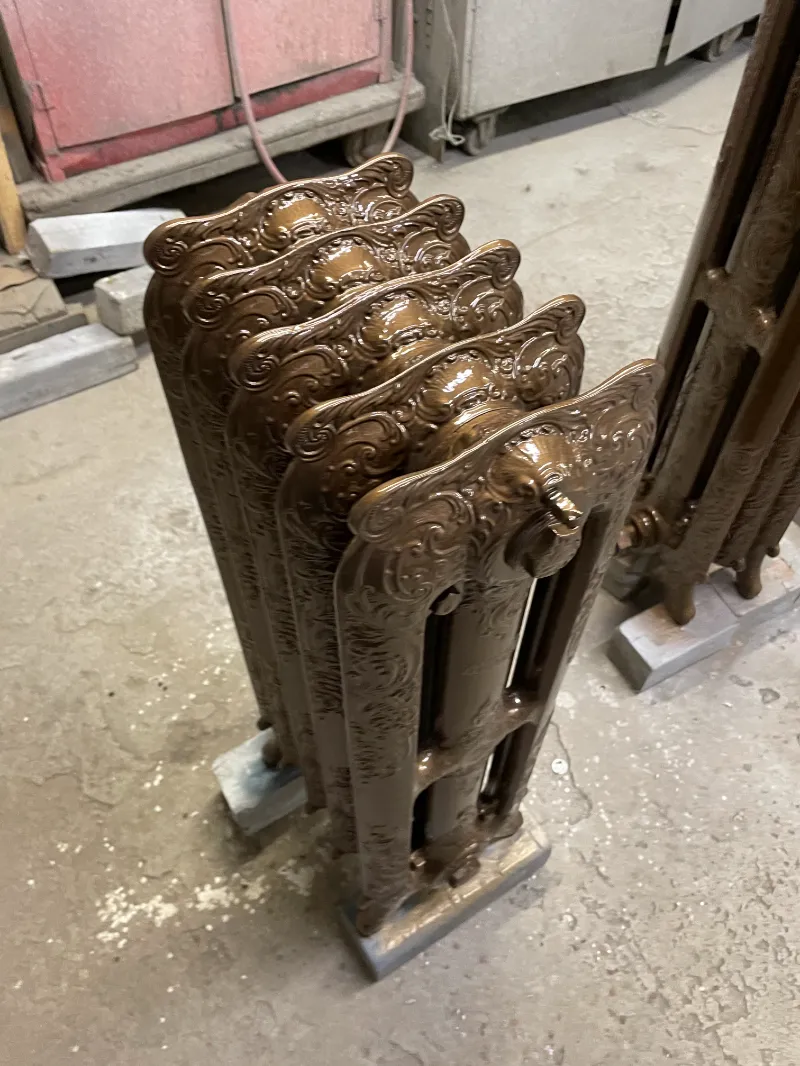
Restoration changes the surface and the condition, not the radiator. The casting comes back as it was made: same size, same section count, same output. What changes is that the detail reappears, damaged sections are repaired, and the finish is one you chose. This is also where a widely repeated claim needs correcting, because the evidence does not support it.
The practical gains are real but specific. Castings that have been buried under sixty or seventy years of paint come back with their fluting, scrollwork and makers’ marks legible again, and on an ornate radiator that is most of the point. Sections that have been weeping at a joint get repaired rather than tolerated. Feet that were broken and shimmed with a piece of timber get fixed. And the radiator leaves with a finish chosen for the room rather than whichever color was in the cupboard in 1968.
Does Removing Old Paint Improve Heat Output?
Not in the way most people are told. The National Bureau of Standards tested this in 1935 and found that paint undercoats, whatever their kind, have no significant effect on a radiator’s performance. What matters is the outermost coat, because output depends on surface emissivity rather than paint thickness.
The finish that does cost you heat is metallic. Aluminum or silver paint roughly halves the radiant half of a radiator’s output, which the same study puts at about a 17% loss of total capacity, equivalent to removing a sixth of the radiator. Repainting a metallic-finished radiator in a non-metallic color raises its heat emission by 10 to 20%. Since silver paint was for decades the default on cast iron, that gain is real for a great many radiators, but it comes from the color of the final coat, not from stripping what is underneath.
The Lead Paint Problem, and Why This Is Shop Work
The EPA reports that 87% of homes built before 1940 are likely to contain lead-based paint, falling to 69% for 1940 to 1959 and 24% for 1960 to 1977. Any radiator old enough to be worth restoring is old enough to assume lead underneath.
That is not only a health question, it is a regulatory one. The EPA’s Renovation, Repair and Painting Rule applies to paid work disturbing paint in housing built before 1978, and the EPA prohibits open-flame burning or torching, power sanding or grinding without a HEPA-shrouded tool, and heat guns above 1100°F. Those are precisely the methods someone reaches for when stripping a radiator at home. Taking the radiator to a shop moves the work away from the people living in the house.
Not sure whether your radiators are worth restoring?
Send us photographs and tell us what the rooms do in winter. We will tell you honestly whether the iron is worth the work, and say so if it is not. Metal Man Restoration strips, repairs, and refinishes cast iron radiators at our shop in Mount Vernon and collects across Westchester, New York City, lower Connecticut, and northern New Jersey.
Restore or Buy New: How the Two Compare
Both routes end with a good-looking radiator in the room, but they differ in what people discover later. Use the table to match your situation to the option that actually fits it.
| What you care about | Restoring what you have | Buying new cast iron |
|---|---|---|
| Cost | Labor and finish on iron you already own; quoted per job | $850–$1,950 per radiator published; $20,000–$35,000 for a twelve-radiator house (published 2026 manufacturer pricing) |
| Heat output | Unchanged, except a 10–20% gain when a metallic top coat is replaced with non-metallic (NBS, 1935) | Sized to the room’s heat loss, so an underheated room can be fixed |
| Original detail | Kept. Period castings cannot be sourced again once scrapped | New patterns; will not match an existing period set exactly |
| Lead paint | Handled in a shop under the EPA RRP Rule, away from the household | Not applicable to the new radiator; the old one still has to be removed |
| Lead time | Scheduled around your heating season; dates agreed before collection | Made to order, so manufacturing plus delivery |
| Best when | The castings are sound and the house is period | There is nothing to restore, the room is underheated, or the iron is finished |
When Buying New Is Genuinely the Right Call
We restore radiators and do not sell new ones, so we have nothing to gain by steering you either way. Four situations call for new iron, and people most often get the second one wrong.
- You have nothing to restore. A new build, a gut renovation that lost its radiators, or a room that never had one.
- The room has never been warm enough. If the existing radiator is undersized for the space, restoring it returns the same insufficient output; a new radiator can be sized to the room’s heat loss instead.
- The castings are genuinely finished. Cracks through thin sections, or iron too far gone for a repair to hold.
- You want something that was never there: a particular modern profile, or a matched run across a house that never had one.
How to Tell Which One You Need
Three checks settle most of these decisions before anyone quotes anything, and you can do all of them yourself in about ten minutes.
- Does it hold water? Look for staining, crusting, or corrosion at the joints between sections and around the valve, and check the floor underneath for old marks. A radiator that has been quietly weeping for years will show it there first.
- Does it heat the room? Not “is it warm,” but does the room reach a comfortable temperature on a cold day without help? If it never has, the radiator is probably undersized, and no amount of restoration changes that.
- What color is it now? If it is silver or aluminum, you are currently losing roughly a sixth of its capacity to the finish alone, and refinishing in a non-metallic color recovers most of that.
If it holds water, heats the room, and is simply ugly, restoration is the obvious answer. If it fails the second test, talk to a heating engineer about sizing before you spend money on either route, because the wrong radiator beautifully restored is still the wrong radiator.
When Restoration Wins
Everywhere else, and for a reason: once a radiator is scrapped, that pattern is gone from the house for good. Castings from the late nineteenth and early twentieth century carry detail that is not reproduced today at any price, and in a period house the restored radiator is consistent with everything around it because it is what everything around it was built to sit beside. It is also the cheaper route whenever the iron is sound, since you are not buying new castings or paying to freight them.
Common Questions About Restoring or Replacing Radiators
The questions that come up before anyone commits — including the one where the common answer turns out to be wrong.
Is it cheaper to restore a cast iron radiator than to buy a new one?
Usually, new made-to-measure cast iron runs $850 to $1,950 per radiator, or $20,000 to $35,000 for a twelve-radiator house, based on one US manufacturer’s published 2026 pricing. Restoration work uses iron you already own, so you pay for labor and finish rather than new castings and freight.
Does stripping the paint make my radiator heat better?
Only the top coat matters. Government testing in 1935 found undercoats have no significant thermal effect, but a metallic top coat costs about 17% of capacity, and repainting in a non-metallic finish raises heat emission 10 to 20%. If yours is silver, that gain is real.
Is the old paint on my radiator dangerous?
Assume so. EPA reports 87% of homes built before 1940 likely contain lead-based paint. The EPA’s Renovation, Repair and Painting Rule governs paid work disturbing paint in any pre-1978 home, which is why this work belongs in a shop rather than a living room.
Can a cracked radiator be saved?
Often, yes. Cracked sections, leaking joints, and broken feet are frequently repairable, and the damage people assume is fatal usually is not. It needs assessment rather than assumption. Where a repair genuinely will not hold, we say so instead of taking the job. See our radiator repair page.
When is buying new actually the better choice?
Four cases: you have no radiators to start with, the room has never been warm enough, the castings are genuinely beyond repair, or you want a size or profile that never existed in the house. Restoration cannot enlarge a radiator, so an undersized one stays undersized.
The Short Version
If you own sound cast iron, restore it. The castings are irreplaceable, the cost is lower than new made-to-measure iron, and the lead paint that makes this shop work is the same reason you shouldn’t attempt it at home. Buy new when there is nothing to restore, when the room has never been warm enough, or when the iron is genuinely finished. And if the radiator is currently silver, expect a real improvement in heat from the finish alone.
Projects Like This
Real projects from our own shop and job sites. Every one of these is work we did ourselves.
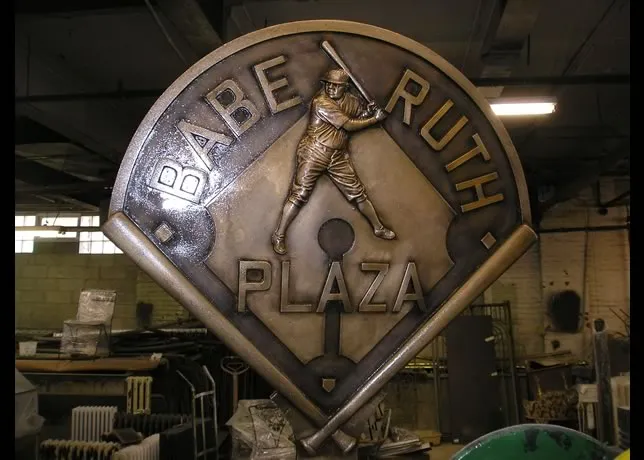 Yankee Stadium Plaques
In April 2008, the New York Yankees and Skanska Construction Corporation hired Metal Man Restoration to restore two...
View the project
Yankee Stadium Plaques
In April 2008, the New York Yankees and Skanska Construction Corporation hired Metal Man Restoration to restore two...
View the project
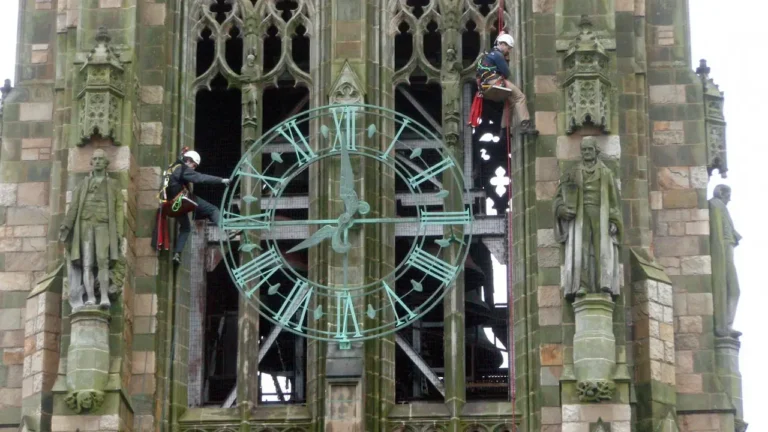 Metal Man Restoration at Yale University's Harkness Tower
Metal Man Restoration was hired in June 2009 to restore the cast iron windows at Yale University's Harkness Tower...
View the project
Metal Man Restoration at Yale University's Harkness Tower
Metal Man Restoration was hired in June 2009 to restore the cast iron windows at Yale University's Harkness Tower...
View the project
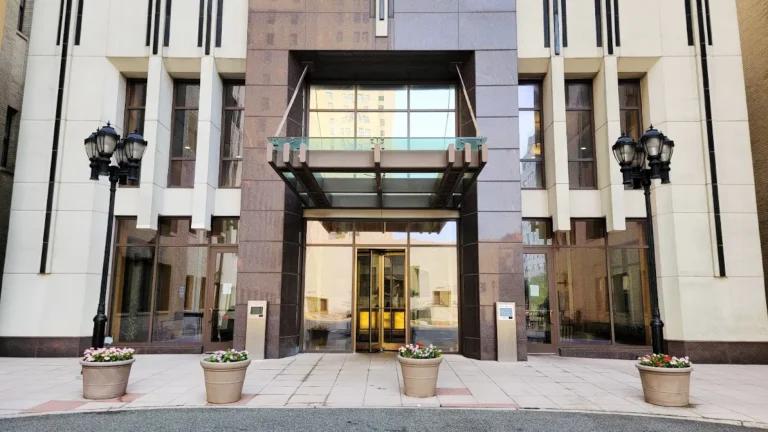 The Rialto The Capital At The Beacon
The former Jersey City Medical Center is a landmark Art Deco complex built between 1928 and 1941 that sat largely...
View the project
The Rialto The Capital At The Beacon
The former Jersey City Medical Center is a landmark Art Deco complex built between 1928 and 1941 that sat largely...
View the project
We moved into a very old house with radiators that were in bad shape, to say the least! I found Anthony from Metal Man and wow, amazing transformation as you can see in the before pic... Truly we were astonished when they were returned to us. Pick up and delivery by Manny was seamless, with great...